Thursday, February 04, 2010

Support shown

Sold out, three-quarters-full, nearly sold out — that's the report from Interplayers' three fund-raising performances of A.R. Gurney's Love Letters. Ellen Travolta and Jack Bannon donated their skills so that all receipts went toward keeping the theater's doors open. Best of all, playgoers opened their checkbooks and made additional donations.
Recession, gloom, nobody cares, blah blah — and yet there's a cohort of folks around here who want local theater to flourish. Travolta reports that after a similar, previous fund-raising performance, Bannon wrote Gurney to express how much that script moves listeners — and that Gurney wrote back in thanks.
We struggle. But the struggle's worth it.

[ photo: Gurney, from broadwayworld.com ]

Labels: , , , ,

Tuesday, February 02, 2010

Sometimes actors know best

An addendum to the video, print preview and blog REview of Sylvia at the Civic:

Spoiler alert:
Don't read if you haven't yet seen the show, or if you just don't care about actors talking about characterizations in light comedies. But do read if you're inclined to think that actors know more about their roles than critics (and even directors).

In addition to the wife, dog and husband in Sylvia, Gurney has created three more roles in the play, to be performed by one actor: Tom, a macho boy-dog owner whom Greg runs into while letting Sylvia run free at a dog park; Phyllis, an NYC socialite and friend of Kate's; and Leslie, a sexually ambiguous marriage counselor who tries to moderate the Greg-Kate dispute about their dog.

What's the through-line in those three roles?
Bobo volunteered that he thinks it has to do with neurosis: All three are screwed up, so at least they make Greg look more sane at least by contrast. Director Brooke Kiener — she was gracious enough to write a long and detailed e-mail in response to many of Bobo's questions ... after a long day of rehearsal -- thinks that the three roles form a commentary on gender roles.

But note the level of perceptiveness in the response of the guy who's actually playing these roles, Jerry Sciarrio (and who will appear, in another connection, on the Feb. 4 cover of The Inlander):

From an e-mail exchange, several weeks into rehearsal for Sylvia:

Bobo: Can you describe any through-line or similarity among your three characters?
Jerry Sciarrio: They all present a voice of authority; Tom has the latest and greatest theories about the condition of human-canine relations; Phyllis knows every one who is anyone in New York and can help Kate get where she wants to be; and Leslie has the cure to any and all relationship difficulties. When portrayed by one actor, it suggests that even though these opinions seem different and independent, they all are the same lame answer to a question that only Kate and Greg can answer for themselves.

Bobo: Why not just cast two more actors? What advantage is there to having one actor play all three roles?
Jerry: Gurney says, "It's all about how we project onto others our own kind of fantasies. Just as the husband sees the dog as a very attractive woman, so we ask the audience to project onto this fourth actor whatever he needs to be."
I would add that three actors would get rather bored with the small parts to play! (ha ha ha)

**

Actors often know their roles best — and Jerry really taught me something here about a play I thought I knew well — which brings up a related point. Bobo has criticized actors for doing X instead of Y in a show, only to discover afterwards that the director requested X. Conversely, I have praised actors for innovating B instead of A in a show, only to be told later that doing B was the director's idea all along.

Criticism's a crap shoot. Trust to the actor, is what I say.

[ photo by Young Kwak for The Inlander; from left: Bill Forant as Greg, Beth Carey as Sylvia, and Jerry Sciarrio as Tom ]

Labels: , , ,

Friday, January 29, 2010

Opening-night review of *Sylvia*

At the Civic’s Studio Theater through Feb. 21

You’ll be reminded of some simple truths and learn a few lessons during director Brooke Kiener’s production of A.R. Gurney’s romantic-doggy-triangle of a love-comedy, Sylvia. Sharing and self-sacrifice are important, for instance. Naysayers are no fun, but fun-lovers are lots of … fun, for a couple of others.
In a good but not-as-good-as-it-could-be production, pacing and tonal shifts are a problem. But the dog lovers’ fantasy -- a show with an actress playing a talking dog -- creates a lot of infectious energy, love and fun. There’s even some marital counseling and lessons in self-determination along the way.
Sylvia is a lovable mutt of a play, a mix of comedy and seriousness -- something to return to for reassurance and reminders.
And it’s a script that’s being served here by two exceptionally good performances — by Beth Carey as the dog and by Bill Forant as Greg, the man who finds Sylvia wandering one day in Central Park.
When called upon, Carey scurries and scampers and sniffs as Sylvia -- leaping into arms, hopping up and down, hugging Greg’s knees, nearly dry-humping a house guest. (She feels bad about that. She went overboard. Her features darken, she bows her head.)
Carey’s adoring eyes laser in on the man who saved her life; she kneels on command, but only resentfully. Her performance ranges from insecurity to mysteriousness, from sexy to resentful, from horny to child-like. Carey has a tomboy vocal quality, full of angry rumbles, that makes the show’s funniest sequence — Sylvia’s getting livid at the sight of a filthy stinkin’ cat — even funnier. For the comedy, Carey has clearly done her doggy homework; for the serious advice scenes, she relies on her own personal assertiveness. It‘s a performance with many facets, and it’s fun to watch. (Full disclosure: Carey formerly worked at The Inlander as a sales rep.)

In his Civic debut, Forant displayed the kind of puppy-dog, boyish energy and wonderment that you want to see in a guy who’s having a midlife crisis and just wants to get back to natural basics. He has a kind of hemming-and-hawing Ray Romano quality -- the self-deprecating drawl, the disbelief injected into conversational pauses and restarts.
Forant allowed the sentiment of the final scene to overwhelm him for a moment -- but he also carefully calibrated how to build up the sadness in the scene when Greg is forced to decide between his dog and his wife: with hunched back, eyes glistening, voice breaking, he presented a strong contrast to his earlier, puppyish, new-dog-owner self.

As Kate — Greg’s wife, who’s starting a new career and doesn’t really have time to have a dog running underfoot — Anne Lillian Mitchell has a thankless killjoy of a role. (You can just feel viewers’ sense of fun and anticipation when man and are running around and learning new tricks — and then The Voice of No enters the room.) But Mitchell breaks through the harridan’s shell and shows us a rounded character during at least two sequences, both involving the possibility of Sylvia’s departure or demise. Kate strides purposefully through this serio-comedy, intent on pursuing her academic dreams; but Mitchell, at times, softens the harsh exterior nicely.
Jerry Sciarrio contributes three small roles, and while his macho New Yorker and sexually ambiguous marriage counselor were well observed, he didn’t create much vocal differentiation at all for his Freudian-slipping socialite. Particularly on entrances and exits, however, Sciarrio shares a lot of well-observed characterizing details about the three figures he portrays. And watch for how much comedy Sciarrio extracts from such little things as a well-timed purse snap and a grimacing refusal to drink a glass of water.

From a directing standpoint, too many scene-changes dawdled; the dialogue often had dead spots. Switches from comic to serious need to be more seamless — and the energy of the physical comedy scenes, which are quite good, could afford to show up in the more lecture-like episodes. Greg trying to figure out the meaning of life, Kate planning for her new career — the onstage dog should yawn (and does), but we shouldn’t: Attack those with more intensity, and both the pace and joie de vivre will pick up. In addition, the final scene, full of nostalgia, sadness, and gratitude for the love of a dog, was handled with a bit too much back-slappy self-congratulation: The audience needs time to register all that’s just happened.
In at least one thrust-stage scene, director Kiener kept husband and wife rooted to the couch long enough for some playgoers to become over-familiar with the backs of heads. But she also directs Sylvia’s rambunctious scenes with verve, and she gets mileage out of a bit when Greg expresses his preference for manufacturing over trading currencies, for things over abstractions, and reaches out to touch someone who, for him, is as real as it gets: Sylvia.

Set and lighting designer Peter Hardie has created a lovely NYC skyline as backdrop for the Cole Porter love-longing of “Every Time We Say Goodbye.”
I don’t want to say goodbye to my memories of Gurney’s script any more than I ever want to say goodbye to my own dogs.

Labels: , , ,

Wednesday, January 27, 2010

*Sylvia* at the Civic


A.R. Gurney's comedy about a man, his wife and his dog opens this Friday at the Civic's Studio Theater and runs through Feb. 21.
Directed by Brooke Kiener
with Beth Carey as Sylvia (the dog), Bill Forant as Greg, Anne Mitchell as Kate, and Jerry Sciarrio in multiple roles

Our video preview of Sylvia is here.


Labels: , , ,

Friday, January 15, 2010

Video preview: *Sylvia*


A.R._Gurney's comedy opens at the Civic's Studio Theater on Friday, Jan. 29.

The three-minute video includes a chat with director Brooke Kiener and with actress Beth Carey, plus rehearsal footage.

[ photo: from puppydogweb.com ]

Labels: , , , ,

Thursday, January 07, 2010

Love Letters, Angels and Art


Ellen Travolta and Jack Bannon will appear in an Interplayers fundraiser, in three performances of A.R. Gurney's Love Letters, on Friday-Saturday, Jan. 29-30. Tickets: $25.

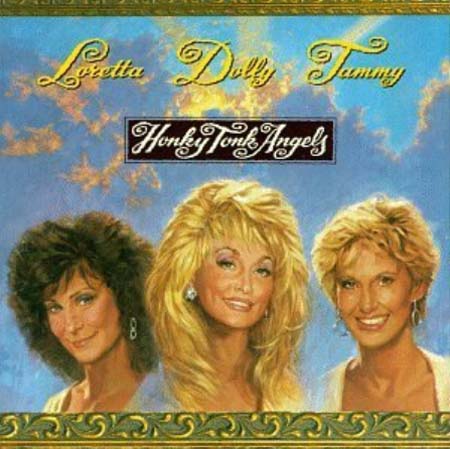
Honky Tonk Highway has been replaced by Honky Tonk Angels, with revised performance dates of Feb. 4-20.

Casting for the March 10-27 production of Yasmina Reza's Art has been announced: Jack Bannon, Patrick Treadway and Roger Welch.

Labels: , , , , , ,

Tuesday, December 15, 2009

cast list for *Sylvia*

Jan. 29-Feb. 21 at the Civic's Studio Theater
by Albert Ramsdell ("Pete") Gurney
directed by Brooke Kiener

starring Beth Carey as Sylvia, the dog
Bill Forant as Greg, the dog-loving husband
Anne Mitchell as Kate, the dog-hating wife
and Jerry Sciarrio as Tom, Phyllis and Leslie
(two of which are drag roles, so after *South Pacific* and that Egyptian thing at the Masonic Temple and goodness knows what else ... I'm just saying that Mr. Sciarrio's sexual orientation is clearly muddled and that perhaps therapy might ... oh, Leslie IS a therapist, you say? Well, then. Let the sexually confused physician counsel himself.)

*Sylvia* is a play for dog-lovers. Bobo saw productions at Interplayers in '97 and at NIC (in 2001?) and has read it a couple of times, and gotta say, the final scene makes me cry every time.
There are people who let dogs lick their faces and people who are grossed out by the very thought of dogs licking their faces.
Me, I wanna roll around on the ground in the "dead bug" position (on my back, legs and arms wiggling in the air) and have about three dogs licking my face, sniffing my ...
You get the picture.
That's a slice of canine heaven right there.
Looking forward to it, panting.

*Sylvia* premiered at the Manhattan Theater Club in 1995 in a production featuring Sarah Jessica Parker, Charles Kimbrough (*Murphy Brown*) and Blythe Danner (among many other accomplishments, mother of Gwyneth Paltrow).


[ photo: Cathy Rigby (yes, the gymnast) as Sylvia in an date-unknown production at southern California's La Mirada Theatre for the Performing Arts; from StageSceneLA.com ]

Labels: , , ,

Tuesday, April 21, 2009

*Love Letters* in Cheney, May 1-17


A.R. Gurney's *Love Letters* presented by StageWest Community Theater
Directed by Charles Kenfield

Fridays-Saturdays at 7 pm on May 1-2, May 8-9, and May 15-16
and
Sundays at 3 pm on May 10 and 17 only

Tickets: $10

Emmanuel Lutheran Church, 639 Elm St., Cheney
Call 235-4575

[ photo: A.R. "Pete" Gurney, from newyorksocialdiary.com ]

Labels: , ,

Saturday, September 20, 2008

opening-night review of *The Dining Room*

at Spokane Interplayers Ensemble through Oct. 4

In a production that acknowledges both the value and the absurdity of ritual in human relationships — along with the need for simple human kindness — Interplayers has presented Spokane with another A.R. Gurney Jr. play that somehow, despite seeming simplicity, explores common longings, common disappointments. Over the course of 20 scenes scattered from the 1930s to the ‘70s, six actors play nearly five dozen characters. Thereís no real plot in *The Dining Room*; what there is, in director Karen Kalensky’s production, is a sense of how we all want love and affection and a sense of home. And don’t always know how to acquire it.
While some of the five-dozen characterizations lack subtlety, the six actors at Interplayers (through Oct. 4) generally deliver real people onstage. In live performance, some of the scenes feel ghostly: Characters from different decades wander past one another, oblivious to the people who will inhabit the same space years from now or years ago,
It’s voyeuristic theater: We witness five-minute scenes between people whose circumstances, despite Gurney’s ability to characterize quickly, we don’t fully know. (Sort of as in real life.)
The action swirls around a turn-of-the-century dining room table, showing how society has neglected, to its cost, the elegant ritual of taking the time to prepare meals and actually converse with one another. (Not all the characters want to take the time — but the room and the table fight back, as if they were themselves characters in the drama.)
Among an ensemble that usually makes good choices, Reed McColm stands out. As a demanding and proper patriarch of the 1930s, he draws out his vowels and pauses to let his commands sink in; soon after, he’s all knock-kneed and peeking about with sidelong glances as an Irish boy who’s infatuated with the family maid. Perhaps best of all — and in an example of how a rounded characterization can be achieved even amid the rapid-fire turnover of Gurney’s short scenes — McColm chooses to play a cranky grandfather as more than just cranky. Approached for money by a grandson he barely knows, McColm doesn’t laugh at his old codger and turn the scene into ridicule of graybeards; instead, he carves out a loving interrogation of the boy, questioning and guiding him, aware of life’s cyclical nature but trying to stave off its disasters for another generation yet.
Thomas Stewart shines as an angry son who just wants to sell off his family’s possessions and as an architect who has reasons of his own for wanting to re-purpose the dining room as offices. Another newcomer to the Interplayers stage, Bethany Hart, makes her mark as a rebellious teen, resentful sibling, needy daughter and bratty kid.

Some of the acting, however, takes shortcuts. Now, if you’re one actor in a cast of six — each of whom is tasked with playing nine or 10 distinct characters in the course of a dozen scenes ranging over five decades, and with limited stage time to establish the distinctiveness of each character you’re portraying — naturally you’re going to concentrate in rehearsal on making each figure different. And the shorthand way to do that is caricature. A scene between a society matron and her unrefined, immature daughter was ruined by director Kalensky’s decision to portray the daughter as a version of Gilda Radner's Lisa Loopner. There could have been an interesting debate between a mother who values tradition and a daughter who values self-determination; instead, it became a one-dimensional comic skit that swirled down the drain of caricature.
Similarly, one of Gurney’s most startling inversions — the grad student in anthropology studying his grandmother as "one of the WASPs of the northeastern United States" — gets undermined by Kalensky’s allowing Thomas Stewart (otherwise very effective throughout the evening) to camp up the student as a nerdy klutz who keeps dropping his notebook. And dropping his notebook.
Then he drops his notebook again and adjusts his nerdy glasses. Not only is it annoying, it steals from the scene’s proper focus: the elderly woman’s realization that the rituals she cherishes are, for others, just fodder for academic study.
A scene between Kalensky and Michael Maher that should have sizzled with sexual tension fizzled instead. And watching adults act like little children can be cringe-worthy sometimes, though most of the excesses are avoided here.

There’s a wonderful kind of time-defying, universalizing quality to having a single actor play a whole roomful of characters: Matriarchs turn into housemaids turn into spoiled children, and the mind is tugged away from our differences and toward the shared goals that unite us. It’s inspiring: Here within these same walls have lived (will live) people whose ups and downs are significantly higher or lower than my own. Just folks — folks who figured out the same problems, even if the customs of our grandparents’ generation did seem so awfully peculiar at the time.
Gurney’s play itself has already aged 27 years, already become a familiar part the American theatrical landscape. This Interplayers production finds enough the laughs and heartbreak in Gurney’s script to keep the tradition alive. It’s a funny/serious stolen glimpse at how some people lived their upper-middle-class lives.

Labels: , , ,