at Spokane Interplayers Ensemble through Nov. 1
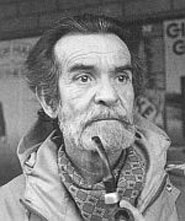
It’s a play about lives in the theater that, ironically, isn’t very dramatic. Athol Fugard’s remembrance of the “ageing old gay ham” who changed a young man’s life is simply too talky and static. Fugard’s *Exits and Entrances* — a two-hander for idealistic young playwright and rueful old actor, directed without much energy here by Karen Kalensky — spends too much time telling us about emotions instead of enacting them. It’s a meandering play of reminiscences without many effective points to make, and even in its set pieces of dramatic intensity — three soliloquies in which the veteran actor is expected to display his craft — Maynard Villers isn’t entirely up to the role’s demands.
*Exits and Entrances* (at Interplayers through Nov. 1) intensifies in a second-act debate about political versus escapist theater — and it nicely advocates the necessity of humility in a couple of sequences — but for the most part, and despite the understated sincerity of Damon Abdallah as the youthful idealist, it’s talky and uninspiring evening (even at just 100 minutes, and even with an intermission added).
Fugard (who’s 76 now) has written a memory play spanning 1956-61. Calling himself, simply, the Playwright, he inserts himself (as a dresser and fellow actor) into the stage-life of Andre Huguenet, the preeminent South African actor of his era. The two men talk and reminisce and talk. After an effective scene-setting monologue by Abdallah delivered in a good-enough-for-my-ears South African accent, we’re thrust backstage at an amateur-except-for-Huguenet production of Oedipus Rex, with the veteran running his lines, dabbing on makeup and then venturing out under the lights after his calamity has struck and he’s self-blinded.
Much of the problem is that for the Oedipus sequence, costume designer Janna Cresswell has put Villers in a ridiculous purple and gold toga that’s supposed to evoke the grandeur of ancient Greece but instead looks like John Belushi in *Animal House* crossed with Liberace. It’s a fatal blow. Villers delivers Sophocles’ lines about the inescapability of fate without too much sawing of the air, but he can hardly be expected to achieve tragic eminence when he’s draped in a gaudy eyesore of a bathrobe. (Villers’ opening lines, ironically, are about the ugliness of a spear-carrier’s knees. Didn’t anyone think to put Oedipus in a simple floor-length white toga?) ...
*Exits* isn’t entirely a failure. The play’s best exchange arrives after intermission in a debate over the value of political theater. The argument grows heated, with Abdallah pacing about on behalf of brotherhood and Villers practically laughing in his face, stating with assurance that all that white people in 1961 want are nice escapist comedies. Abdallah squats before his mentor, Villers leans over in his chair, and the two men grasp one another’s wrist, almost sharing a moment of almost-insight — but then, like so much else in *Exits,* the moment’s allowed to dissipate, unexplained and unexamined....
In Villers’ defense, Fugard fires up the pressure cooker: We’re told again and again that the speech we’re about to hear Huguenet deliver was his “most remarkable ever,” or something that sent chills up onlookers’ spines, or for once involved an actor who wasn’t merely watching himself act but was utterly and completely consumed in the emotional complexities of his role.
You try delivering a speech after an introduction like that.
On the featured soliloquies, Villers goes 1 for 3....
Kalensky deserves credit for bringing Interplayers a work of ideas and emotions by one of the world’s most respected dramatists. But *Exits and Entrances* doesn’t connect the actors’ humility with universal appeal, and it isn’t written or acted convincingly enough here to have the inside-baseball appeal for drama fans that a life-in-the-theater play should have. Interplayers’ *Exits* should be counted as a failed experiment.
*** For the rest of this review, please pick up a copy of Thursday's Pacific NW Inlander (Oct. 23 '08 issue).
Labels: Athol Fugard, Damon Abdallah, Exits and Entrances, Karen Kalensky, Maynard Villers, Spokane Interplayers Ensemble