Thursday, January 21, 2010

Random comments and oversensitive critics


We all form impressions of plays from a variety of sources: previous reviews, audience reactions, word of mouth, press releases and previews, eavesdropped comments, little quirks and accidents in performance, whims and prejudices about matters both trivial and important. And something like that happened to me with Curtains at the Civic. 

Lyn Gardner's comments in The Guardian about critics not working in a vacuum may be relevant here. Her point is that critics are not unbiased and objective; they're unavoidably forming preconceptions about an upcoming show (just like everybody else) from the moment that a production is announced.

Bobo happened to attend Curtains with Dannie, Long-Suffering Wife of Bobo; I reminded her beforehand not to start issuing opinions at intermission or even after the show, because I know from experience that even comments made in passing have disproportionate effects on how I form my own opinions.

But of course there was the drive home, and after two hours in the dark, the topic's kind of unavoidable, and so she let drop that the mystery, as such, was up to the standards of an average mystery. (Red herrings scattered about, lots of suspects; and the writers cheated a bit by revealing a couple of details so late that you could never have realized, but ... all in all, a typical mystery that would satisfy fans of the genre.) This was in response to my saying that it felt like more of an homage to show business than like a classic, well-constructed mystery.
My point: Almost without realizing it, I felt reassured that mystery fans would not scoff at the mystery in Curtains as too simplistic. A couple of days later, when I sat down to write my review (later than usual; life intervened), I overrode my sense that the mystery was on the slim or cheesy side, and had sort of internalized what Dannie, L-SW of B, had said.
And so I didn't criticize the murder-mystery side of the show in the way I would have if I had gone to the show alone. 

And then I read Jim Kershner's review, which opens with three letter grades (and turned to be more critical of the show than my initially critical-sounding review) and thought that in some ways (not for the first time), he had reviewed the show more accurately and concisely than I had.

[image: food critic Anton Ego from Ratatouille, from kera.org ]

Labels: , , ,

Wednesday, January 20, 2010

Critiquing the play that's *not* in front of you?


Jonathan Jones may be discussing how visual art shows might be curated in different ways, but his comments parallel the situation with some theater reviews: It's all very well to hew to the safe line that reviewers should review only the plays that are in front of them, but what if — hypothetical case — a theater puts on a decidedly old-fashioned, clearly out-of-date production, with no attempt at updating or relevance, but simply to bank on ticket sales because of longtime name recognition?
I agree that it would be obnoxious to spend an ENTIRE review doing nothing but whining about how this show is being done instead of some other, more contemporary piece. But is it REALLY true that such a (hypothetical) review shouldn't mention the problems involved at all?

It's an extreme example, but The Merchant of Venice is simply not the same play after the Holocaust as it was beforehand.
Similarly, in the last 50 years, American attitudes toward race, sex, gender, consumerism, leisure time, education, smoking, evolution, drugs, science and so on have all changed.
Not every production has to a thesis or explicit relevance. But by the same token, doing a show simply because it was popular 50 or 20 or even five years ago is not, in itself, enough justification for choosing to produce a play or musical. And if there's zero attempt to link another era's artifact to the concerns of today, then critics ought to (briefly) comment on it.

[ image: Munkustrap from Cats, from britishtheatreguide.info ]

Labels: ,

Monday, December 28, 2009

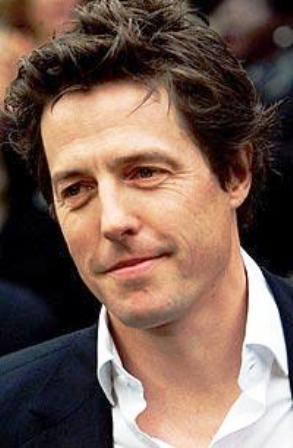
Hugh Grant hates going to the theatre


An article in The Guardian about why Hugh Grant dislikes theater contains a wake-up call for those of us who love it:

(a snippet from blogger Nosheen Iqbal's commentary:)
The level of engagement – and fiscal investment – needed for a night at the theatre is often much greater than that demanded by listening to an album, watching a film or reading a book. The frustration caused by having to disengage with it once you've realised it's not your cup of tea – walking out at the interval instead of turning it off or flinging it across the room – is greater still.
I love theatre with a passion that hinges on the nerdy, but even I'd say that the ratio of hits to misses put on in an average year is way lower than it should be.

In other words, we all have the obligation to give theater our all. Because every bad night out just turns off yet another potential long-term playgoer.

[ image: from realself.com ]

Labels: ,

Monday, March 16, 2009

Losing 10k arts orgs

From Charlotte Higgins' story on Saturday about arts funding the U.K., "Arts world braced for 'hurricane' as recession hits," in The Guardian, a sobering contrast to the impact of the recession on arts orgs in the States:

Arts leaders are pointing to the bleak example of the U.S., where the arts, with minimal support from the public purse, exist at the whim of the market and where 10,000 arts organisations could collapse this year, according to Americans for the Arts.
According to Diane Ragsdale, associate programme officer of the U.S.-based Andrew W. Mellon Foundation, a particular problem for American arts organisations is the hits taken by endowments, which are failing to yield income - or are actually "underwater," meaning their current value has dropped beneath their historical value.
"Some organisations have endowments in the millions - but cannot make their payroll," she said.
In the UK, the problems are less extreme, and many corporate sponsorship deals signed before the crisis hit are still in place.

Labels: , ,

Tuesday, December 02, 2008

arts audiences are too AFRAID


We’re all too afraid of appearing stupid. We go to arts events, but we’re tormented by the nagging fear that someone will scope out how ignorant we are.
Guy Dammann’s article in The Guardian focuses on the snobbery of the classical-music-and-opera crowd (and people's fear about clapping during the intervals between the movements of a symphony), but it applies to many other art forms as well.
(In fact, this is such a good and thought-provoking – if difficult – article that Bobo ended up more or less paraphrasing and excerpting from it as he went along.)

Can’t we just appreciate a painting, or do we have to go on and on about Neo-Post-Expressionist-Fauvism? Can’t we just enjoy a show without the damn critics telling us what we should or should not like? (Critics shouldn’t be perceived as telling, but it’s my own/their own damn fault if they are.)
People openly admit that they don’t know basic scientific facts or the name of the Secretary of the Interior – so why this fear of being thought ignorant about the arts? Because the arts are supposed to improve us, make us better — as Dammann notes:

"To be sure, art certainly does improve us, in ways more important than many suspect; but it is never less likely to achieve this effect than when self-improvement is mistaken for an improvement in the way we are seen by others."

A rising middle class will latch onto aesthetic appreciation as a marker of how refined one is; it’s a way of escaping the lower classes.
One more problem, though: aesthetic experience is completely subjective.
Of course we doubt ourselves: There’s no right or wrong. If we’re conscientious, we keep going back to the artwork, again and again, checking our perceptions, checking to see if our opinions have changed any. (Too bad that we let others’ opinions infiltrate and infect this process.)
And that’s why studying art has an ethical dimension. It forces us out of ourselves and into engaging someone else’s mind on his or her own terms; it breeds empathy. We have to keep checking back with the artwork. (*King Lear* is a very different work according to whether your age is closer to Cordelia’s, Kent’s or Lear’s.)

Dammann continues:
"But every time the self-doubt at the heart of this encounter turns to fear – every time we worry about mistaking a painting, not understanding a book, or clapping at the wrong moment during a musical performance – these responses too are included in the veneer, taking off the shine and replacing it with a harder, opaque lacquer. Slowly, revered without being respected, the works close up and darken. Audiences become consumers; critics become conservators; museums become mausoleums."

What a sad but accurate commentary on how most people and pop culture regard opera or Shakespeare or the golden era of musical comedy.

Labels: , ,

Wednesday, October 29, 2008

Vipers with notepads ... not so viperish?

In Fugard's *Exits and Entrances,* Andre Huguenet refers to critics in that way. But Chris Wilkinson in Britain's
The Guardian makes the point that local critics have their place: they know their regional audiences, aren't as jaded as the national critics, and so on.
This is an ENTIRELY self-serving post, I know.
But local arts coverage — truly — is going to be the salvation of print. That and local sports. (And the I Saw You's.)
Because where else are you going to get them? National and international news, state-level news, local weather, crossword puzzles -- you can get all those online, anytime.
Alt-weeklies like *The Inlander* are well-positioned: free, locally focused on the arts ... and with our new Website to launch in Jan. (this blog will be fed into a mega-blog of about three other Inlander blogs -- separable from the rest, but appearing on the start page, apparently), increasingly more responsive and less bound to once-a-week schedules.
On the other hand, says
Michael Riedel of the N.Y. Post, critics don't matter anymore — only bloggers do.

(Honore Daumier, The Critic:)

Labels: , , , ,

Saturday, September 06, 2008

Stage to screen

Two films are in the works: *August: Osage County* and David Harrower's *Blackbird* (about a victim of sexual abuse and her abuser, meeting years later).
Jeff Daniels garnered raves as the not-creepy-as-you-might-think sex offender.

All courtesy of Britain's The Guardian

*Blackbird* is currently playing at Artists Rep in Portland.

And check out this article at Broadway.com

Review of March-June 2007 Manhattan Theatre Club production is here

Labels: , , ,