Thursday, October 14, 2010

*The 39 Steps* at Interplayers


"A little bit of James Bond, a little bit of Masterpiece Theatre, and a lot of Monty Python" — that's how director William Marlowe describes the farcical Hitchcock spoof The 39 Steps (at Interplayers through Oct. 30).

Our hero, a dashing chap called Richard Hannay (played by Damon Mentzer) finds himself up against an international spy ring after a femme fatale (Alisha Gunn) implores him to help her and then gets herself murdered in his London flat. What ensues is a wild goose chase that involves locomotives racing up to the Scottish Highlands and narrow escapes from the coppers while Hannay finds himself handcuffed to a beautiful woman (also played by Gunn, who is the sister of Brian, currently starring as Buddy Holly at the Civic).
All the other parts (and there are many dozens of them) — vaudeville performers, underwear salesmen, Bobbies, bed and breakfast operators, thugs, detectives, orators — are played by two "clowns" (Damon Abdallah and Jerry Sciarrio).
The entire show — innovated by Patrick Barlow just five years ago, though it's based on a century-old novel and the 1935 Alfred Hitchcock film — needs to have a frantic and improvised feel. That's why Marlowe — in his directing debut at Interplayers, despite having worked on and off at the joint for two decades as backstage techie and as an actor — has chosen a "found props" approach: Junk will encircle the entire perimeter of Interplayers' thrust stage, with the four actors picking and choosing and making their costume changes in full view of the audience. 

Despite the show's done-on-the-fly flavor, it's
technically challenging, with 200 lighting cues
and 135 sound cues (most of them in the first act, which has Hannay clinging to a speeding locomotive as he tries to outwit the coppers).

Barlow's script is almost verbatim to the movie, and it includes several allusions to other Hitchcock films, like North by Northwest and Rear Window. Marlowe has even incorporated a bit with a birdcage (and guess which 1963 film starring Tippi Hedren that alludes to).

A lot of the sound effects are done by the actors, with Sciarrio vocally imitating the sounds of a 1930s clunker starting up.

Yeah, but will it be funny? Marlowe says that several times during rehearsals, "we had to stop to wipe away tears."

This weekend: Thurs-Sat at 7:30 pm, Sun at 2 pm; continues through Oct. 30. Tickets: $15-$21. Interplayers is at 174 S. Howard St. Call 455-PLAY. Visit the theater listings under "Stage Thrust" in the Bloglander at inlander.com.

Labels: , ,

Tuesday, May 11, 2010

Unusual socks fetish

Psychopathia Sexualis, by John Patrick Shanley
May 13-29 at Interplayers
directed by Reed McColm


with Dan Anderson as Arthur, Caryn Hoaglund-Trevett as Lucille, John Hart as Dr. Block, Damon Abdallah as Howard, Bethany Hart as Ellie

[ photos by Tammy Marshall for The Pacific Northwest Inlander ]

Labels: , ,

Monday, May 10, 2010

Hilarious Socks Farce

Psychopathia Sexualis
by John Patrick Shanley
May 13-29 at Interplayers
directed by Reed McColm

Arthur (Dan Anderson) is getting married to Lucille (Caryn Hoaglund-Trevett). Problem is, he can't perform sexually unless a pair of his father's argyle socks are in view.
Having counseled Arthur about his problem, Dr. Block (John Hart) decides to try some shock therapy: He just steals the damn socks.
Arthur enlists his friend Howard (Damon Abdallah) for help; Arthur has a gossip-monger wife, Ellie (Bethany Hart); high jinks ensue.

Ben Brantley's Feb. 1997 review in the New York Times concentrates on the centrality of the Dr. Block role (played then by Edward Hermann) and compares the comedy's witticisms to those of S.N. Behrman, Nichols and May, and early-'60s Woody Allen.

[ image: from compasstheatre.com — from a production a year ago in San Diego ]

Labels: , , ,

Saturday, April 17, 2010

Patty Duke to direct *The Miracle Worker* at Interplayers


Artistic director Reed McColm announced on Friday night that Patty Duke will direct the show in which she has played both leading roles -- at Interplayers, sometime this fall, perhaps as early as September.

Anna Marie Duke played Helen Keller in William Gibson's play on Broadway at ages 12-14; at age 15, she starred alongside Anne Bancroft in the 1962 movie. For a made-for-TV movie in 1980, Duke (at age 33) took over the role of Annie Sullivan (with Helen Keller played by Melissa Gilbert).

And now, at age 63, Duke will return to the show with which she is identified -- right here in Spokane, both as director and by taking a cameo role.

Even before that, sometime "in the first week of June," Duke will appear here (date and venue TBD) for an In the Actors Studio-style interview.

Two months ago, Duke ended her run as Madame Morrible in the San Francisco production of Wicked.

Visit the arts blog at inlander.com.
[photo: from the 1962 movie; from sixties60s.com]

Labels: , ,

Friday, February 12, 2010

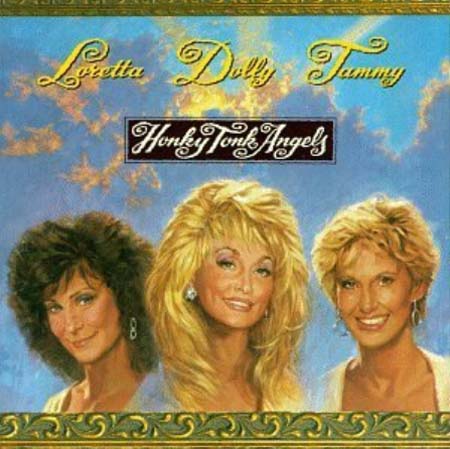
review of *Honky Tonk Angels*


Honky Tonk Tanks

PLAY REVIEW
This is the worst Interplayers show in nearly 20 years. Pandering is no way to rescue a theater
MICHAEL BOWEN

What if some actors showed up at a cowboy bar and started enacting dramatic scenes from Tennessee Williams? They’d get shoved out into the parking lot.
Why then are theater managers allowing balloon-breasted Dolly Parton caricatures and hot-pantsed farm girls in pigtails to croon pickup-truck music inside a theater?
You want some Patsy-Tammy-Loretta-Dolly melodies, one after another, with rote patter and corny choreography interjected? Fine. They have casino ballrooms for that.
People go to the theater to be exposed to new sensations and ideas, not to be talked down to as if they were a bunch of mindless, lovesick stooges.
Honky Tonk Angels, a musical revue seldom produced (for good reason), is at its most depressing when the audience feels the need to clap along feebly to the pre-recorded, drum-machine beat of “Delta Dawn” while a trio of low-rent angels (white satin dresses, silver belts) act as cheerleaders, their eyes pleading with their onlookers.
By the end of that “Delta” song, I didn’t care what goddamn flower she had on — and as for “Ode to Billie Joe,” I wish Billie Joe McAllister would hurry up, jump off the Tallahatchie Bridge and take this show and its “playwright” with him.

Oh,
Honky Tonk Angels — bravely performed by a trio of women with pasted-on smiles — has its moments of harmonized prettiness. But it’s a floor show, not a musical.
At the outset, unfortunately, Jennifer Jacobs is required to stroll out and start jabbering about her fellow actresses (instead of doing exposition and actually interacting with them). The effect is like one of Disney’s animatronic World of Tomorrow exhibits, and just about as realistic and engaging. Soon they’re threatening us with a hootenanny.
Jacobs has the trio’s loveliest singing voice and a gift for engaging front-row onlookers while riffing on “playwright” Ted Swindley’s predictable patter. Marina Kalani gamely tries to inject some hubba-hubba excitement into a mostly anemic “9 to 5.” As the farm girl, however, Emily Cleveland’s throatier delivery didn’t project as well. But there was some lovely three-part harmony at the end of “Paradise Road,” and “I Will Always Love You” was a stirring highlight.
And while the singers were hampered by piped-in music — there are no live musicians here — the evening prompted a lot of “Five down, 26 musical numbers to go” thinking. Because characterization is not Mr. Ted Swindley’s strong suit. At least his
Always… Patsy Cline (performed at Interplayers in 2003) had the benefit of the developing singer-fan friendship and Cline’s tragic story arc. Unfortunately, as subtitle for this show, apparently he chose “Two and a Half Hours of One Damn Thing After Another.”

No, I’m not a country fan. But as my review of the Jeff Bridges movie Crazy Heart (page 39 of the Feb. 11 Inlander) demonstrates, I like it fine when it’s sung to express genuine dilemmas and accompanied by credible behavior that doesn’t talk down to its listeners.
The purpose of selling out like this — of doing a show for people who don’t really like theater — was to rake in the bucks so that Interplayers can live to fight another day. And maybe the theater will sell a few more tickets to country fans who aren’t regular theatergoers.
But later this season, will those country fans return to the likes of
Eleemosynary and Psychopathia Sexualis?
Pandering doesn’t mean profit. Pandering just drives away your core audience.
The way to make people come back to Interplayers is to perform intelligent comedies and dramas, not the
Hee Haw high jinks of dreck like this.
And as for ticket sales: The opening-night house was almost exactly half full.

Artistic director Reed McColm is working hard to rescue a Spokane cultural institution that people care about, as the capacity and near-capacity audiences for the recent Love Letters fundraisers indicate. But his board’s decision to pin their hopes on a Honky Tonk hit were unfounded.
The conclusion was emotionally manipulative, with the sadness unearned and the bid for significance unrealized. And then the sound system wavered.
In my 18 years of going to Interplayers,
Honky Tonk Angels is the worst show I’ve seen. Only one or two others even come close.
So it’s fitting that
Honky Tonk’s bumpkin characters sing “I’ll Fly Away” four times.
After Feb. 21, thankfully, they will. 

Honky Tonk Angels continues at Interplayers, 174 S. Howard St., on Wednesdays-Sundays through Feb. 21. Tickets: $15-$21; $12-$19, seniors. Visit interplayers.com or call 455-PLAY.

Labels: , ,

Thursday, January 07, 2010

Love Letters, Angels and Art


Ellen Travolta and Jack Bannon will appear in an Interplayers fundraiser, in three performances of A.R. Gurney's Love Letters, on Friday-Saturday, Jan. 29-30. Tickets: $25.

Honky Tonk Highway has been replaced by Honky Tonk Angels, with revised performance dates of Feb. 4-20.

Casting for the March 10-27 production of Yasmina Reza's Art has been announced: Jack Bannon, Patrick Treadway and Roger Welch.

Labels: , , , , , ,

Friday, November 27, 2009

opening-night review: *Underneath the Lintel*


What if you went on a wild-goose chase and the goose turned out to be God?

Underneath the Lintel is a play of nervous laughter — of the playwright, Glen Berger, who composed this spiritual quest of a philosophical comedy, this vaudeville routine for harried clown filled with mysteries and angst; of the solo actor performing it; of those of us in the audience, out in the dark, who wonder about what our lives might mean, or if they mean anything at all. (We’re willing to laugh at ourselves, the possibility of our insignificance, but not much. Not so very much.)
During Reed McColm’s one-man rendition — amusing, flawed, halting, eventually moving — a lot of people will find themselves laughing nervously.

Reference librarians, world travelers, vaudeville comedians, Jews and mystery lovers will all find themselves reflected in Berger’s play. Also anybody who has ever looked up at the nighttime sky and wondered what the hell we’re doing here, and what it all means.

McColm’s Dutch librarian appears to us at first from out of the shadows, emerging from behind the blackboard nervously, clutching his suitcase of “evidences,” halting and too deferential. Will he be soft-voiced and anxious all night? We could be in for a long two hours.
Right away, there are references to death and transience, erasure, the insignificance of our lives. There’s the nervous laughter. This is a comedy?

In the overnight bin, the Librarian has found a book that’s 113 years overdue. (Much smacking of the forehead.) Inside are clues that lead him successively to a village in China, to a shtetl in Poland, to a dry cleaner’s in London. It becomes an obsessive historical quest that Berger’s script manages to make, in succession, ridiculous, unlikely, questionable, probable, profound.

There’s much that’s delightful in McColm’s performance — the librarian’s love of trivia; the funny little skips and jigs; the way he breaks down the fourth wall and our expectations; the way how, when the prospect of an international journey opens up, his face brightens with anticipation. But there is also much that could be improved.
McColm’s overdone initial nervousness makes us nervous; so do Berger’s references to death and decay. More energy and eccentricity from the outset would be reassuring: “We may be stuck with this odd Librarian fellow,” viewers might think, “but at least his tics and strange perspectives might make the time pass agreeably.”

On opening night, McColm experienced multiple writing-implement failures — his chalk kept cracking and flying away from the chalkboard — and the way he improvised his way around that and into comedy was instructive. “American chalk,” he deadpanned; later, he explained verbally what he was supposed to have drawn (before the chalk broke). The audience recognized the spontaneity and laughed all the harder.
The contrast, unfortunately, was with some of McColm’s more obviously contrived and halting moments.
He’s too nervous at the outset. Sometimes he’s reaching for his lines. There’s much fussing and dithering — with an eccentric European nerd, we expect as much — but there are also limits. In several instances, the grasping for cues during jokes led to pauses that overextended or undermined the punch lines. There was some misnumbering of evidence items and some miscalculating of dates — forgivable, but they popped us right out of the play.
And there were two larger flaws: an accent of indeterminate origin that went away for long stretches and then returned, unannounced, along with a noticeable first-act lack of energy.
Midway through Act One, our Librarian friend finds himself poring over the account books for an English estate sometime in the early 18th century — something to do with a fox hunt, don’t inquire too much — and McColm delivers an entertaining playlet between a proper British twit and a grotesque intruder. Problem was, when it was time to revert to the Dutchman’s (Russian? East European?) accent, it was nowhere to be found, and for several minutes. Then it showed up again.
And then the pace lagged: too many pauses and umm’s, too much loss of momentum. The Librarian is feverish: the hall’s rented for tonight, and he has this fantastic story to tell, and he’s taken a huge chance (his “daring gambit,” he calls it) by leaving work and going to places that this stay-at-home bookish fellow never thought he would go, and he’s onto his huge philosophical mystery…. There needs to be frenzied, commanding mania, nearly from the outset. But director Damon Abdallah and McColm have chosen too tentative a path for the opening. Berger’s little rest stops (the Librarian’s recollections of lost love, the petty grievances with co-workers, the wonders presented by exotic cultures) allow the respites we need (in case they’re worried about being too intense from the beginning and then having nowhere to go).
So the performance lacks a sense of increasing mania. But it also has its delights: McColm’s self-satisfied little shake of the head (for when the Librarian has unearthed a tidbit of knowledge); the glasses on the end of the nose; the index finger held up for attention; the crucial, tagged piece of evidence held triumphantly aloft. He plays to our guilt: Audiences love the I’ve-been-naughty-you-caught-me tone in accounts of what librarians feel and say when some unthinking patron violates the library’s rules.
And there was evidence of another kind — that McColm had entranced his audience — when the big reveal was made (the identity of the character whom the Librarian has been hunting down) and you could (apologies for the cliché) hear a pin drop; he had them in the palm of his hand. Soon after, a re-enactment of a biblical episode, and again the watchful quiet.
The first act ends with a characteristic joke. The Librarian — the homebody, the man of routine, is going to risk all and gallivant off to China in search of clues. “The land of rice!” he exclaims. He can’t believe these things he’s planning and places he’ll go — “… me, who had Hunan chicken once … and got the runs for a week.”

My recurring thought — “this’ll get better as the run goes on” — was borne out within the opening-night performance itself: The second act, as compared with the first, feels more accomplished, frenetic, funny, profound and moving.
Even then there are the unnerving references to death and destruction (a flood in China, the vastness of the universe). We’re indifferent to the fate of people we don’t know, the Librarian explains: “Unless you knew him, it’s all just behind the couch,” he says. Millions die halfway around the world, and we turn to another section of the newspaper.

McColm is especially good at comic deflation — those moments when he arouses anticipation, then lets it fall flat. (“And do you know what I found? … nothing.”)
There are some second-act passages about regret over lost love and raging against the injustice of fate (of having to live in a world ruled over by a God who allows our lives to be fated) … that seem unprepared for.
But by and large, Act Two is funnier. The merger of the Librarian and the audience and the fugitive whom he’s searching for seems clearer; and McColm makes his bookish fellow more obsessed, more despairing and more defiant — all of which ratchets up the performance’s energy level and interest.

We are all, each one of us, the legendary, mythical biblical character whom the Librarian pursues so obsessively. We’re none of us content with all the frantic running around that we find ourselves doing on the surface of this rock that’s hurtling around an insignificant star. Both funny and sad, Berger’s play taps into the mixed existential mood — just as Charlie Chaplin and Samuel Beckett did, just as McColm will once his act finds its groove.


Final notes:
Painting: by Marc Chagall
Underneath the Lintel runs at Interplayers through Dec. 12. Visit interplayers.com.
Jim McCurdy should not butt into curtain speeches and double their length with rambling sales pitches.
I counted 80 in attendance on opening night (in a theater that holds 250). Some playgoers left at intermission. Too bad, because they missed the better of the two acts and the resolution of the mystery. (McColm pauses early in the show, peers out, asks, “Is this all there is?” — and the moment is, for now, too self-reflexive for comfort.) Here’s hoping for bigger houses….
For a video preview of Underneath the Lintel, visit either inlander.com (under “Arts and Culture”) or youtube.com/theinlander.

Labels: , , , ,

Thursday, November 19, 2009

video preview: *Underneath the Lintel*


at Interplayers, Nov. 25-Dec. 12

See snippets of Reed McColm as the Librarian both in performance and in rehearsal with director Damon Abdallah (who really needs to get back on his meds, as you'll see).

AVAILABLE THURSDAY, NOV. 19:

Visit them here at youtube.com/theinlander

[ photo of book jacket from broadwayplaypubl.com ]

Labels: , , , ,

Thursday, October 29, 2009

review of *Doubt*


at Interplayers Professional Theater
seen Oct. 28

Doubt — isn’t that the one about the nun and the priest, and she’s convinced that he’s a creepy child molester? I saw the movie — why bother seeing it again?
Because seeing it onstage, reduced to just four characters, is a more intense and psychological experience. Because Interplayers’ four cast members are uniformly fine in their roles. And because this is the best drama Interplayers has produced in the past three years (and probably in the past five).

Start with Aaron Murphy’s Father Flynn — East Coast Irish accent, all-American looks, the bemused look of a man who has something to teach you and knows he has a clever way to do it. We see him solo, alone, then suckered into a meeting with two nuns that’s not at all about what he thinks it is — the priest, marginalized in his own parish.
Murphy was so convincing, he put this former Catholic schoolboy right back in the confessional. When he ended his second sermon by making the Sign of the Cross, I came this close to joining him. (We laugh at these 1964 people and their exaggerated respect for the Church’s hierarchy -- but you know, once in 1962, when I was in first grade at St. Mary’s of the Assumption, I peered over the rectory wall and saw a priest, sunning himself. With his shirt off. And was immediately convinced, truly, that I had committed a mortal sin and would roast in hellfire eternally. Which is a hard thought for a 7-year-old to bear.)

Ann Russell Whiteman strolls with authority around her office desk, convinced utterly — convinced beyond all doubt — that Father Flynn must be stopped and the children protected. (There was much talk afterwards about how the show changes from night to night. And it’s true, this time it registered with me, the number of times she’s referred to as joyless, a Puritan, cold and unforgiving; at other moments, she can appear like a warrior for righteousness.)
Whiteman’s eyes glisten early on, when she plants suspicions in the young nun’s mind; Whiteman makes clear that Sister Aloysius is a bit too eager to be regarded as the most clever fox in the henhouse. No upstart young priest is going to outmaneuver her.

As Sister James, Bethany Hart uses subtle facial expressions to convey her wonderment, doubt, anger and sadness over what her superior is trying to do. As the mother of the young boy who’s supposedly the object of Father Flynn’s pederastic lust, Rebecca M. Davis plants herself in that office chair and scowls, even as she observes decorum. She mixes being deferential with being defiant (nicely sustaining the play’s ambiguity and balance), and the emotion’s contained but still evident.

Throughout this intermissionless chess game, what we’ve been waiting for is the faceoff of priest and nun in the penultimate scene. When it arrived, at first I thought Murphy was being weak, unassertive — until I grasped (so I thought, can’t be sure, still have my doubts) that he was wearing down under Sister Aloysius’s interrogation. The pendulum was swinging: In a performance in which, for most of the time, she had seemed joyless and vindictive — and he, cheerful and innocent — now our doubts about him were rising to the forefront. Sister’s methods may be Machiavellian (corrupt means, but valuable ends, she preaches) but maybe, just maybe, she has ferreted out corruption in the end.
Or not. Doubt is a mirror that shows us ourselves: inclined to trust others, or accuse them; inclined to forgive or indict. The value of such a production — especially in a Catholic town dominated by a Catholic university and its law schools’ many graduates, its parochial schools and G-Prep Bullpups, its own sad history of priestly sex abuse and coverups — is not only that it “takes you on an emotional journey,” but that the journey, quite likely, will differ from night to night.
Theater should piss some people off. Being inoffensive is not, forever and always, a virtue. When people get angry, somebody’s touched a nerve.

Roger Welch has directed seamlessly, with no fuss and with many of the most gripping speeches delivered while stock-still. Renae Meredith’s set includes a polished-wood square for the priest’s sermons, both in the pulpit and on the basketball court: an arena for the baring of our souls.

Certainty without evidence is faith. But when certainty, absolute conviction, turns past the point of being willing to hear contradictory opinions and evidence, it hardens into dogmatism. And Sister Aloysius — played by Whiteman with squinting, aloof, marble-cold implacability — is dogmatic for 89 of the show’s 90 minutes. By the end, even she has her doubts.
Shanley is taking aim at dogmatism of all kinds, religious and political — at one point, the actual line “You lie!” is shouted at the priest, and suddenly I was transported back to Obama’s health care speech before the joint session of Congress.

Overcome your doubts (it won’t be any good, I’ve seen it before, sex abuse is such a sad topic, people draped in black who lived 45 years ago have nothing new to tell me), and just go. Theater is transitory — this one goes poof on Nov. 7 — but for theater this good, attention must be paid. Cancel your bowling night, skip Mass just this once, whatever — but go see Doubt at Interplayers.

And yes, I’m influenced by how meaningful and good tonight’s post-performance talk-back was — actors articulate, questions observant, Reed McColm moderating like a pro. Theater of the kind we can and should be proud of. An important play, done with subtlety and intelligence. I could go on and on about this cast, and about how Whiteman and Murphy’s performances in particular are exceptional and accomplished. But just go see the show for yourself.
With this show about sin, the most apparent sin is that more people aren’t supporting this show.
Lake City on the verge, Interplayers teetering — if you value theater in this town, overcome the excuses of "no time," "no money." Overcome your doubts and just go see Doubt.

[image: movie poster, from tower.com]

Labels: , , , , , , , ,

Sunday, September 20, 2009

A rant about "Mature Language"

There are posters all over the Interplayers lobby warning of impending doom and global destruction, all because Terrence McNally's script for *Frankie and Johnny in the Clair de Lune* is R-rated.
These are two adults having a one-night stand and all-night-long debate about whether they're going to make anything more of it than just sex. So while the conversation can get philosophical and even poetic, it also includes references to particular body parts and sex acts, along with fart jokes and f-bombs.
This is objectionable?
Two people have just fucked each other silly, and now they're supposed to revert to prudish standards of decorum? So why this need for "mature language" warnings plastered all over the Interplayers lobby?

How many people ever attend a play without having asked anyone ANYTHING about its content? (That is, in a world filled with electronic media, advertising and word-of-mouth, it'd be awfully difficult not to know the basic premise of this or any other stage play, if you're actually attending it.)
If you're looking for a G rating, you don't show up at a one-night-stand play in the first place. And if you're curious about how humans behave in their most intimate, vulnerable, needy moments, you're probably expecting that the language might get spicy like jalapenos.
Shouted profanity can be discomforting, yes, because audience members need to continue sitting there in the dark, more or less quiet -- and more or less lending consent to all the dirty talk by the fact of their remaining silent about it.
But when it comes to sex, love, companionship, and the pursuit of happiness, a little squirming around in our seats may not be such a bad thing. You won't change your mind about anything if you don't get a little uncomfortable first.

The point being: Why is Spokane posting R-rated warnings that would have been appropriate 40 years ago but which now seem superfluous and quaint? When people fuck and then discuss it afterwards, they tend (surprise, surprise) to use the word "fuck."

The 1991 movie with Michelle Pfeiffer and Al Pacino sanitized most of that out. It was intended for a general audience, and the suits took out whatever they deemed objectionable. (They got an R rating.)


But in the theater, we need to feel that we're nearly in the room with these two. And a couple engaged in all all-night boinking session are not about to shy away from colorful terms.
Every single person in the Interplayers auditorium had to know that they were about to witness a play about fornicators -- a one-night stand, working-class characters, emotions laid bare, a very frank discussion. So why are we making such a big deal here about the dirty talk?
Reed McColm told Bobo that he had to soft-sell the script to the Interplayers board, downplaying all the off-color language that McNally's characters use.
For some, prolific profanity is a deal-breaker: If a play has it, they're not going. And that's their right.
What I'm objecting to is the notion that profanity-laced plays are somehow a) unrealistic or b) ipso facto immoral.
But they'll miss out on the play's ultimately hopeful message. The Christian message of salvation -- we are all sinners, God's grace has redeemed us, we must endure, we must choose to live generously -- is actually validated by a play like Frankie and Johnny.
It isn't a bleak or immoral play; it's an honest and hopeful one. I just wish it were being given a better production than it currently is at Interplayers.
[ spoof R-rating from panelsonpages.com ]

Labels: , ,

Saturday, September 19, 2009

Patty will be in town


In his curtain speech for the opening of Interplayers' 29th season, new artistic director Reed McColm announced that that the previously announced *Actors Studio*-style interview of Patty Duke, intended as a fund-raiser for IPT, will take place after Duke has concluded her run as Madame Morrible in *Wicked* -- that is, sometime after February.
[photo: Patty Duke as Madame Morrible, from the San Francisco Sentinel]

Labels: , ,

Friday, September 18, 2009

review of *Frankie and Johnny in the Clair de Lune*


performed at Interplayers Professional Theater through Oct. 3

An apartment. Very dim light. Loud, guttural yelps of orgasmic delight. Laughter. "I wish I still smoked," she says.
Well, they're certainly having a good time tonight.
Too bad the mood isn't maintained in Interplayers' production of Frankie and Johnny in the Clair de Lune (through Oct. 3).
The problem's in the acting. For most of the first act, line-deliveries didn't match emotions described in the script; beats were lost, significant moments rushed through and undervalued.
As Johnny -- the short-order cook who's lonely and curious, but determined to improve his emotional lot in life -- John Henry Whitaker portrays a motormouth who doesn't speak quickly. He's a passionate guy who displays no passion.
Whitaker doesn't enact lines, he recites them. He's supposed to stare at Frankie (Karen Kalensky) intently and doesn't; he's supposed to be playful (during a close-your-eyes-and-sit-on-the-floor game) and isn't. Later, when he's supposed to express shock at witnessing an act of violence over in another apartment, he's about as surprised as when you find something that was supposed to be filed under M filed instead under N.
A carpe diem outburst, delivered while kneeling, seems more creepy than full of any lust for life. The "open your robe" sequence -- Johnny just wants to admire her naked body, just for 15 seconds -- doesn't work as well as in the movie, in which Al Pacino expresses puppy-dog appreciation while Michelle Pfeiffer chatters about this and that, nervously. Here it's more like a gynecological examination with an irritated patient.
Kalensky's character, meanwhile, is insecure and lacking in self-confidence: She's not so sure she wants this fancy-talkin' fella making goo-goo eyes at her, coming on way too strong. But Kalensky's manner is more festive (let's party!) and frantic (who is this guy who I've invited into my bedroom?!) than insecure. Again and again, she pulls her robe around herself, indicating her defensiveness. But Frankie's tattered self-esteem doesn't become evident until much later, and by then it's too late.


For much of the second act, Frankie and Johnny (played in this production by real-life spouses) act like a long-married couple, negotiating just how much they can tolerate in the other. They've lost out on their dreams; they have plenty of regrets; they're feeling older.
Director Jonn Jorgensen doesn't coax much passion out of Whitaker. In a couple of moments calling for tenderness and physical intimacy, Jorgensen has Whitaker planted over by the kitchen counter, all the way across the stage from Kalensky. (A promise never to hit a woman is more credible if you're actually within range of hitting her when you say it.)
The first-act misinterpretations are unfortunate, because Terrence McNally's script has many good observations and touching moments, and because the acting becomes simpler and more heartfelt in both of the hopeful act-ending sequences.
Kalensky has a wonderful monologue when Frankie recalls her high school prom -- illuminated by the sunrise just outside her window, her face glows with pleasing nostalgia.
And Kalensky doesn't make a big deal of Frankie's having the munchies: Her literal hunger implies her emotional hunger and loneliness, but Kalensky suggests the point simply, without indicating her character's neediness.
A lovely final sequence, rendered simply both in the acting and the directing, has Frankie and Johnny bathed in soft light and Debussy's music, yet with the romance undercut -- realistically, amusingly -- by some playful bickering.
So the evening's not a total loss. But McNally's script is much better than the performance it's receiving here.
[photos: playwright Terrence McNally, from the La Jolla Playhouse; Kalensky and Whitaker watching TV, from the Interplayers production; by Young Kwak]

Labels: , , , ,

Wednesday, September 16, 2009

*Frankie and Johnny in the Clair de Lune*


by Terrence McNally
at Interplayers Professional Theater, Sept. 17-Oct. 3 (artistic director: Reed McColm)
directed by Jonn Jorgensen
starring Karen Kalensky and her real-life husband, John Henry Whitaker
The cook has a crush on the waitress. Can they turn a one-night stand into something more?
1987 play starred Kathy Bates, who wanted the movie role, which went instead to Michelle Pfeiffer (with Al Pacino, Nathan Lane, and Kate Nelligan)
McNally will turn 70 on Nov. 3.


[photos by Young Kwak for The Inlander]

Labels: , , , , ,

Friday, July 10, 2009

Big changes at Interplayers ...

... including the name, the leadership, and the new season.

From its 29th season henceforward, what's been known as Spokane Interplayers Ensemble will be known as Interplayers Professional Theatre, or IPT.

Reed McColm is the new artistic director.

The 2009-10 season will feature small-cast dramas and just one musical:

Frankie and Johnny in the Claire de Lune, Sept. 17-Oct. 3
Karen Kalensky (now "artistic associate") and her husband, John Henry Whitaker, in Terence McNally's play about working-class lovers

Doubt, Oct 22-Nov 7, by John Patrick Shanley
dir. Roger Welch, with Aaron Murphy, Bethany Hart, Rebecca Davis, and Ann Russell Whiteman

Underneath the Lintel, by Glen Berger, Nov. 25-Dec. 12
Reed McColm in a one-man show

Honky-Tonk Highway, Jan. 28-Feb. 13, 2010
country-western band reunites after death of their leader

Yasmina Reza, Art,
March 11-27, 2010

Eleemosynary, by Lee Blessing, April 15-30, 2010

Psychopathia Sexualis, by John Patrick Shanley, May 13-29, 2010

[photo: John Patrick Shanley, from vassar.edu]


... and yes, Patty Duke will make an appearance too. No date yet, but the actress (now appearing as Madame Morrible in Wicked in S.F.) will sit for an "Inside the Actors Studio"-style interview, right here in Spokane.

Labels: , ,