Sunday, October 17, 2010

review of *The 39 Steps*

at Interplayers through Oct. 30

It's funnier if you're funny without showing us that you know you're funny, you know?
The 39 Steps — a spoof of the veddy British 1935 spy-caper movie by Alfred Hitchcock, performed with just four actors with a lot of props and quick changes — certainly signals its comic intentions.
An innocent man gets himself ensnared in international intrigue, chased over loch and heather (he's in Scotland, you see) by policemen and double agents and a self-righteous woman who refuses to believe in his innocence. Of course, we never really think that our hero, the dapper Richard Hannay (Damon Mentzer) is going to succumb to the nefarious forces that encircle him — he has such an awfully dashing mustache, don't you know — but we're also not entirely sure how he's going to escape, either, especially with an uncooperative blonde handcuffed to him.
And it's a hoot. When the newsboy transforms into a Bobby with nightstick and then a traveling underwear salesman — all with switched hats and accents — it's delightful to watch in a clap-your-hands, jack-in-the-box surprise kind of way. When Jerry Sciarrio (in one of several dozen roles as Clown No. 1) transitions from a dignified lord of the manor to a goose-stepping, lunatic Nazi, the threat's rendered comic and harmless even as we giggle over the actor's venture into make-believe. Things happen fast, and we're invited to join in the fun: chairs become car seats, picture frames are held up to become escape hatches, audience members are invited onstage while the overworked actors rest for a while in front-row seats.


Michael Ward's set design rims the stage with bric-a-brac, and director William C. Marlowe has committed his show to a grab-a-prop-and-run operation.
Too often, the props get in the way. Oh, Marlowe loves his sight gags and sound gags — holds them and clutches them, crushes them in his arms, then ravages them and leaves them quivering, still barely alive, in the dust. In particular, the thunder-and-lightning gag that accompanies one of the play's key phrases became, with repetition, less amusing than annoying.
The action is set in the 1930s, with the Nazis threatening Europe. But when Marlowe camps up the proceedings with a disco ball or the Jeopardy theme, there's a sense that we're being condescended to — as if we couldn't enter into the comic spirit of a romp through pre-war British culture without a wink and a nod. It's funny — Hannay is faced with a serious dilemma, and that familiar quiz-show music comes over the speakers — but it's funny in terms other than the show itself is funny. And Patrick Barlow's frenzied four-actor adaptation — which refines two actors' reinterpretation of three movies' worth of revisions of the original novel — has plenty of laughs to offer all on its own, thank you very much indeed, sir.

In fact, the biggest laughs in Interplayers' production of The 39 Steps — and there are many bright spots in this show — land not because of all the wigs and props and furniture, but because of the acting. In particular, in the three-way role of femme fatale, innocent farmer's wife and skeptical love interest, Elisha Gunn is a revelation. With the opening scene's German woman of mystery, Gunn wrests multiple meanings out of single words: When she comes on to Hannay, she turns the final three syllables of "You wish to be — in-VOL-ved?" into a symphony of seduction, rubbing her thigh once up, once down, no more. She's a woman on a mission. She rolls the R's in "Richard" for so long that his name seems to tumble out the door and come back in again. For a melodramatic scene involving murder, she flops around like a stuck fish (and Marlowe hits upon an ingenious way of getting one character out from beneath a corpse). In the second act, when her third character is angry about being forced into proximity with Hannay, Gunn spits out a feigned agreement of "Yes, darling" with about six different kinds of irritability and rancor in it.
In a later sequence, as a dour Scottish farmer's wife, you might think Gunn is overdoing the skipping, barefoot ingenue bit until it pays off when she curls her toes around a chair leg, then extends them over to Hannay's side of the table for a flirty game of footsie — all while her Calvinist husband (Damon Abdallah, in one of his Clown No. 2 roles) intones a parody of saying a guilt-ridden grace, imploring our "unforgiving Father" to "beat our gluttonous thoughts and lash our lustful desires, as with a three-forked flailing stick, pressing our bestial noses to the grindstone...." Self-disdain like that is funny, especially when we see "lustful desires" going on under the dinner table.

But when you overload a show with stage business, verbal humor like that can get overshadowed. Hannay has a naive quality — slow to realize that he's been seduced or duped, easily distracted by trivia, rather vain about his appearance, willing to believe the best of others even when they're schemers — and Mentzer has pipe-clenched-in-teeth, grinning quality that lives just down the block from Dudley Do-right. His little witticisms and side comments sometimes get squashed by the insistence on scampering over to fetch the next prop.
The scene when Hannay is pushed into public speaking is an example of Marlowe's comic business over-burdening the text. The joke lies in Mentzer's character being caught in a pickle and understandably nervous about it; but a pop-up, roll-over bit of physical comedy detracts from the scene's focus (though it has to be admitted: Mentzer changes pace during the speech, improvising a rousing ovation that electrified the opening-night crowd).

Meanwhile, the two clowns generate a lot of verbal jokery. Abdallah gets comic mileage out of two different characters by making them, in different ways, almost completely unintelligible. Sciarrio's doddering hotel keeper and insane Aryan form hilarious contrasts. Abdallah can do both ends of a phone conversation; Sciarrio can imitate the ignition-cough of a '30s clunker starting up.
And this is the kind of show where the cues come in deliberately late: First you get the comic ineptitude, then you get a second joke out of the actors glaring at the sound booth. The 39 Steps proclaims its amateurishness for all to hear, though sometimes you just wish it would stop proclaiming and get on with the next chase scene and predicament.

All four actors have brilliant moments, and when they settle comfortably into the run, some of the timing issues (bobbled lines, cues that hit just a tad late) and diction problems (exaggerated German and Scottish accents aren't funny if they're completely indecipherable) will disappear.
Marlowe's 39 Steps is creative, inventive, rollicking. It just needs some editing: Sometimes, gags just need to be gagged.

(a shorter version of this review will appear on Oct. 21 in The Pacific Northwest Inlander)

Labels: , , , , , ,

Thursday, March 18, 2010

*The Comedy of Errors*: review by Reed McColm

A cheerful production of Shakespeare’s The Comedy of Errors, the Bard’s earliest comedy (possibly his first play ever), was staged by Bill Marlowe’s Revelers Drama troupe at SFCC this month. Marlowe himself directed with expected energy and verve, using an unusually swift, clean, and locally flavored adaptation of the original by none less than The Inlander’s busy theater critic Michael Bowen. In addition to cutting, revising, and retouching the prose, Bowen also undertook a role of crucial authority onstage, in the person of the Duke, whose judge-like appearances bookended the play and both triggered and concluded the delightful confusion. That Bowen pulls off all his roles rather well was perhaps the happiest news of the evening, given the many ways his ambitious efforts could have disappointed.

The Comedy of Errors depends on something of a stretch. Identical twin brothers, sons of a wealthy merchant (here called Cleon), are separated soon after birth in a storm at sea. In the same storm, another set of identical infants, sons of a poor woman, are also separated. One boy from each set is thereafter raised by Cleon, while the other two mismatched boys are kept by the mother in another city, neither set knowing what happened to the other. (Hate when that happens.) And all of this happens decades before the play even begins. Whew.

Further complicating the bustle is that both sets of boys are identically named. Where Shakespeare called both twin noblemen Antipholus, Bowen renamed them Nicholas; the two servants, formerly each known as Dromio, were here both Yoyo. (Comical, yes — but is that more credible a name?). These sobriquets are of course necessary for misidentifications to work, but the befuddlement could easily spread out from the stage and hopelessly into the house. Shakespeare helped satisfy the problem by identifying one set as being from Ephesus, and the other from Syracuse; Bowen helpfully reset the towns as Hillyard and Kennewick, and — what do you know? — that was fun. Marlowe’s deft direction and, especially, his bright costume plot (Renae Meredith designed the set and coordinated costumes) made relationships clear, without betraying the (in)credibility of mistaken identities made by the characters.

review of The Comedy of Errors
by Shakespeare; adaptation by Michael Bowen
Directed by William Marlowe
SFCC Revelers Drama, Spartan Theatre
reviewed by Reed McColm; based on the March 13, 2010 performance

Bobo comments:
Reed was awfully generous here, given that he had directed the Interplayers production in February of Honky Tonk Angels, which Bowen savaged in print. Errors closed on March 14, but it's nice to hear another voice in local theater reviews.

[ photo: Reed McColm, from booksinmotion.com ]

Labels: , , , ,

Monday, November 23, 2009

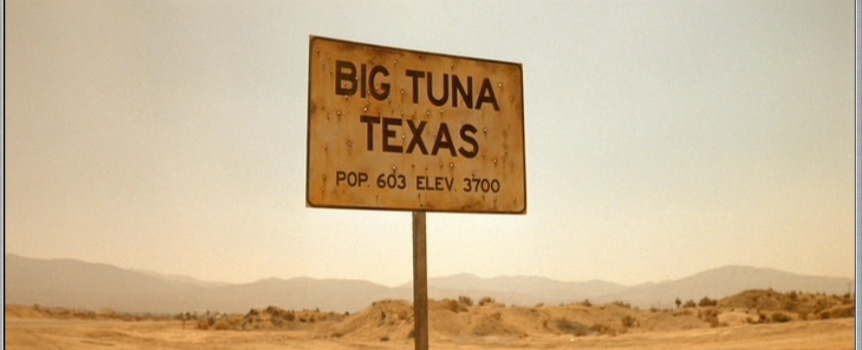
*Tuna* review addendum


[photo of Joe Sears, one of the Tuna creators, as Aunt Pearl Burras, from the Austin Chronicle]

Bobo's Nov. 26 print review of A Tuna Christmas at the Civic is gimmicky, as you'll see. It says what I intended, but I want to expand on some points.

This is a good show that's consistently funny. I don't think it's a great show, because I don't think that it conveys the loneliness and sadness of some of the characters. To pull off physical comedy as well as Dan Anderson and Damon Mentzer do is remarkable. But in my view, a production that's predominately full of hilarious physical and verbal comedy but which also has touches of pathos and sentiment is superior to a show that serves up comedy alone.
Petey Fiske is pathetic and funny, but also touching: He's an inept fool and he keeps getting brutalized and overwhelmed by animals, but he LOVES those animals, and at least he's trying to help creatures that are literally society's castoffs and discards. I remember seeing flashes of that personal, pathetic sadness in Bill Marlowe's own performance three years ago at ARt, but not in Anderson's this time around.

But you can only admire the logistics of this show — all the memorizing and quick changes and rapid-fire timing.  The five-person backstage crew (were there even more?) deserve much applause for the quick changes and momentary impersonation of the two actors, the UFO, everything.

I can imagine playgoers who are seeing Tuna Christmas for the first time being really pleased with and amused by this production.
But it may have a different effect on those who've seen the show before. 
Because you can't just cite the ADVANTAGES of remounting an often-produced play (Tuna Christmas hasn't been done at the Civic before, but it has elsewhere, and it's hilarious, and it has name-recognition in this market). There are also, from a theater's point of view, some DISadvantages: Folks around here may have already seen this script performed elsewhere (2001 at Interplayers and 2006 at Actors Rep for Tuna Christmas, and that doesn't count at least a couple of other Greater Tuna productions).
(Click here for Robert Faires' April 2002 article in the Austin Chronicle on "The Secret History of Tuna.")
And you have to measure up to the memories. And this production, in my opinion, mostly does, but not completely.
Take the final scene: divorced Arles Struvie maneuvering for a dance with Bertha Bumiller (reluctant to drink alcohol, yearning to have her husband and a stable home life back, but lonely and not unwelcoming when it comes to being the recipient of an advance by a locally famous radio personality). Mentzer's progressive drunkenness and stiffening with pleasure at the touch of a man after so long were very well-observed. But since two earlier exchanges about Bertha's loneliness weren't given their full weight, the scene seemed more cute than Christmas-sentimental. (I'm referring to Bertha's reply to Stanley, that all she wants for Christmas is his father at home; and Stanley's frank admission to Aunt Pearl that the husband ain't never gonna come home.)

I didn't think Anderson vocally differentiated Didi Snavely (the gun-shop owner "with a voice like an ashtray full of burnt-out cigarette butts," as I think one reviewer put it) from Petey or Jody Bumiller (the little boy). (I thought Didi could be angrier -- she's arming herself to the teeth and has a no-good deadbeat UFOlogist of a drunken husband.)
But both Anderson and Mentzer were amazing, stunningly good in the Dixie-and-Pearl scene that closes the first act. They must have studied the characteristics of elderly women, because they captured all of it — aching bones, facial tics, eagerness to be regarded as lively still, even if their more energetic glory days are long gone.
The Civic's Tuna isn't a perfect show, but it's very good, and funny, and entertaining.


Labels: , , , , , , ,

Wednesday, November 18, 2009

*A Tuna Christmas* photos


at Spokane Civic Theater, Nov. 20-Dec. 19
directed by William Marlowe
starring Dan Anderson and Damon Mentzer

Labels: , , , , , , ,

Thursday, October 01, 2009

cast for *A Tuna Christmas*

Nov. 20-Dec. 19 at Spokane Civic Theatre
by Jaston Williams, Joe Sears and Ed Howard
directed by William Marlowe of SFCC, who appeared in both *Greater Tuna* and *A Tuna Christmas* alongside MIchael Weaver at Actors Rep in Aug.-Sept. 2006

Dan Anderson (*Moon Over Buffalo,* Interplayers, Nov. 2006, and *The Graduate,* Interplayers, May 2009)
and
Damon Mentzer (Oberon in *Shakespeare in Hollywood,* Civic, April 2009, and *The Importance of Being Earnest,* Actors Rep, Sept. '08

Labels: , , ,

Tuesday, February 17, 2009

*Othello* at SFCC, March 5-15

Thursdays-Saturdays, March 5-7 and March 12-14, at 7:30 pm
also on Sunday, March 8, at 2 pm

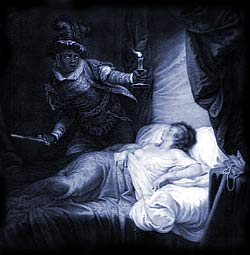
"I am your own, forever": Look for the Act 3 satanic wedding in which Iago inverts Othello's marriage with Desdemona and twists it into a pledged murder pact with guess who as the victim. (Creepy.)

with Aaron Lee Lewis as Othello and Andrew Parish as Iago
directed by William Marlowe and designed by Renae Meredith

SFCC, Spartan Theatre, Communications Building, Bldg. 5, 3410 W. Fort George Wright Dr.
Tickets: $8; $6, faculty, staff, seniors and students
Get in on Sunday, March 8, at 2 pm with $1 and a non-perishable food item for Second Harvest Food Bank.
Call 533-3592.

photo: *Othello* at London's Globe Theater, July 2007, with Zoe Tapper as Desdemona; from flickr.com

Labels: , , ,

Friday, November 14, 2008

*The Government Inspector* at SFCC


through Nov. 16 at the Spartan Theater, Bldg. 5, SFCC
directed by William Marlowe
Friday-Saturday at 7:30 pm; Sunday at 2 pm (get in for $2 and two cans of food)
A play about political corruption is always timely. For this particular version of Maxim Gogol's 1836 play director William Marlowe has the assistance of Daniel Varavin, who was born in Uzbekistan, has lived in Moscow and acted in two Russian-language productions of this same play.
Marlowe has devised a wonderful pile-out-of-the-trunk, clowns-in-a-compact-car kind of opening to create a commedia dell-arte, improvisational feel to this farcical play. Sometimes the farce feels overdone and strained, but the cast also gets a great deal right.
Marlowe has borrowed a large revolve, intended for the never-was ARt production of *Doubt,* for this show, allowing him to parade characters along the front edge of the stage while interior and exterior scenes are being swapped.
As with many college productions, the talent is concentrated in the lead roles. As the Mayor, Brandon Montang showed great range: hysteria, deviousness, hauteur, befuddlement. He needed to be over-the-top in his final tantrum and was. As the wisecracking servant, Joe Pekala (a North Central product) was an unsightly beanpole (tall and in a comically delightful, godawful plaid suit); he captured the comedy by not overdoing it and by keeping a modicum of wisdom underneath the smart-ass exterior. And as Khlestakov, the tatterdemalion joy-boy who lucks into a situation where everyone seems deluded into thinking that he's an important and influential government official (and then greedily capitalizes on it), Chad Herrmann has great energy and ne'er-do-well spirit. He's exasperated but thinking ahead, at first unsure of himself but then quickly evolves into a con man without conscience.
Put it this way: Bobo would love to see any of these three guys onstage again. They're good.
In general, the cast does too much comic mugging. Better to treat the absurd situations as serious.
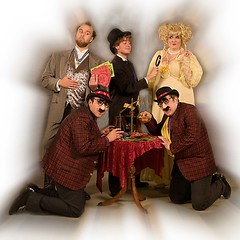
The twins (Jeremiah Hatch as Bobchinsky, Andrew Parish as Dobchinsky), both disguised in Groucho Marx glasses and schnozzes, accomplished some clever physical comedy. Even better, they blended timidity and arrogance -- they showed us the real people underneath the manic exteriors.
*Govt. Inspector* is too much a one-joke play: We get one over-awed citizen after another (ooh, be nice to the big, bad bureaucrat -- be sure to bribe him, too), and the joke can get tiring. Some visual gags are overdone (sneezing into an ear-trumpet, comic double-takes milked to the max and then beyond).
Bobo learned from watching this how voice is even more important than appearance in the theater: Several cast members slurred phrases and had poor diction. In contrast, others had distinctive, even booming voices. If you can't be heard, the play falls apart ...
Tonally, this is a difficult play: jokey setups with serious consequences. The SFCC cast didn't always attain this difficult balance. Gogol was after govt. corruption, but also the ways in which we live in denial about ourselves.
The long Russian names are a stumbling block. Bobo kept thinking, this has a lawless, Wild West feel to it -- why not produce it among the tumbleweeds and give everyone names like Marshall Dillon and Miss Kitty, just to plug into recognizable types?
SFCC's *Govt. Inspector* has its dry spells and many tedious jokes, but it also has a boffo opener, a great (and justly famous) freeze-frame at the very end, and several strong performances, all augmented by better-than-average (for comm. college) costumes and sets.
You have three chances left to see this show; it closes Sunday afternoon, Nov. 16, at 2 pm.

Labels: , ,

*Othello* auditions, Nov. 24-25


at SFCC with director William Marlowe
auditions are Mon-Tues, Nov. 24-25, at 1 pm in Bldg. 5, Spartan Theatre, SFCC, 3410 W. Fort George Wright Dr. in Spokane
Prepare a two- to three-minute monologue "that is consistent with the theme of the production."
Call 533-3592
The beast with two backs will make an appearance on March 5-15, 2009 (during the actual performances).

Labels: , ,